
Sustainability · 2025
In this section51 topics
- Sustainability Policy4 items
- Sustainability Goals & UN SDGs3 items
- Policy Review3 items
- Impacts on Stakeholders — Overview1 item
- Business Value Chain1 item
- Stakeholder Analysis1 item
- Environmental Policy & Guidelines5 items
- Environmental Policy Review3 items
- Energy — Plan & Guidelines2 items
- Energy — Electricity Consumption1 item
- Energy — Fuel Consumption1 item
- Energy — Targets2 items
- Energy — Performance & Outcomes2 items
- Water — Plan & Guidelines2 items
- Water — Withdrawal, Discharge & Consumption1 item
- Water — Targets2 items
- Water — Performance & Outcomes2 items
- Waste — Plan & Guidelines2 items
- Waste — Generation, Disposal & Recycling1 item
- Waste — Targets2 items
- Waste — Performance & Outcomes2 items
- GHG — Plan & Guidelines2 items
- GHG — Emissions1 item
- GHG — Emissions Verification4 items
- GHG — Principles & Standards1 item
- GHG — Targets1 item
- GHG — Performance & Outcomes2 items
- Environmental Legal Incidents1 item
- Other Environmental Management1 item
- Social Policy & Guidelines3 items
- Social Policy Review3 items
- Social — Principles & Standards Practised1 item
- Human Rights Due Diligence2 items
- Employees — Plan & Guidelines3 items
- Employees — Workforce2 items
- Employees — Remuneration & Provident Fund2 items
- Employees — Training & Development2 items
- Employees — Occupational Health & Safety2 items
- Employees — Labour Relations2 items
- Employees — Employee Representation2 items
- Employees — Targets2 items
- Employees — Performance & Outcomes2 items
- Customers — Plan & Guidelines3 items
- Customers — Satisfaction Results1 item
- Customers — Targets2 items
- Customers — Performance & Outcomes2 items
- Community & Social — Plan & Guidelines3 items
- Community & Social — Targets1 item
- Community & Social — Performance & Outcomes2 items
- Other Social Management1 item
- Law Violation Incidents1 item
Sustainability Policy
Has a Sustainability Policy
Yes
Policy Description
The Company prioritizes sustainable business operations by considering factors affecting business operations, customers, and society, as well as factors impacting stakeholders in economic, social, and environmental aspects. Key issues include enterprise risk management, respect for human rights, and greenhouse gas management. The Company has guidelines for managing all dimensions of sustainability according to their priority and urgency to achieve maximum efficiency. It has established a Human Rights Policy Commitment to clearly raise awareness, consistent with the framework of the Sustainable Development Goals (SDGs) relevant to the business throughout the value chain.
The Company recognizes that corporate governance processes are crucial factors for continuous, stable, and sustainable business growth. The Company prioritizes and is committed to establishing good management standards to build trust and benefit all relevant parties and stakeholders. Therefore, it has established a Sustainability Management Policy to guide the formulation of strategies in corporate governance and
Economic, Social, and Environmental Aspects, with the following guidelines:
Divided into various dimensions, comprising:
Environmental Dimension
-Environmental management
-Efficient resource utilization
-Climate management
Social Dimension
-Social data disclosure
-Fair treatment of labor and respect for human rights
-Employee potential development to meet HRDD standards
-Employee motivation and retention
-Well-being and safety in the work environment
-Community and social engagement
Governance Dimension
-Business Ethics, Code of Conduct, Corporate Governance, and Anti-Corruption
-Risk management
-Tax operations
-Identification of material business issues
-Customer relationship management
-Supply chain management
-Business innovation for social and/or environmental benefit
-Cybersecurity and personal data protection
-Service quality management
1.Corporate governance
The Company adheres to 7 key principles of good corporate governance, namely:
Accountability: Acceptance of responsibility for performing duties.
Responsibility: Awareness of duties with sufficient capability and efficiency.
Equitable Treatment: Treating stakeholders equally
Transparency: Transparency in operations and verifiable information disclosure.
Value Creation: Creating added value for the business in both the short and long term.
Ethics: Promoting excellent practices and good ethics in business operations
Social Awareness: Having a sense of social responsibility in operations, and the Company mandates a policy review at least once a year, consistently. Additionally, a Corporate Governance and Sustainability Working Group has been established, assigned with ESG (Environment, Social, and Governance) responsibilities, to screen and monitor the Company's practices to align with good corporate governance principles, business operations, vision, and mission.
2. Fair Business Practices : The Company strictly adheres to laws, regulations, corporate governance policies, and the Code of Conduct and Code of Ethics in business operations. It establishes internal control systems to prevent corruption, ensuring business is conducted with transparency, honesty, integrity, and fairness.
3. Anti-Corruption : The Company has an anti-corruption policy to serve as a guideline for employees and relevant parties, including reporting tips or complaints. In the past year, in Q3, the Company submitted documents for participation in the Thai Private Sector Collective Action Against Corruption (CAC) project and declared its intention, and the documents are currently under consideration. Subsequently,
The Company has successfully received certification for its participation in the Thai Private Sector Collective Action Against Corruption (CAC) project and declared its intention on December 30, 2023, and the Company has a policy to continue participating.
4. Respect for Human Rights and Fair Labor Practices : The Company prioritizes maintaining a safe working environment for employees, does not support unfair labor practices, child labor, or illegal foreign labor, and emphasizes human rights principles for employees at all levels. It ensures fairness in selection, compensation, and is committed to developing employee potential. Furthermore, the Company has established a provident fund for employees to support short-term and long-term savings, and for use upon retirement.
5. Continuous Business Process Development D: The Company recognizes the importance of creating long-term added value for products and services, considering customer and stakeholder satisfaction, and promoting and developing business innovation alongside social and environmental innovation for sustainable business operations.
6. Responsibility towards the Environment, Community, and Society as a whole: The Company is responsible for and supports environmental care, education, and religion in the community, participates in social, community, and environmental activities, and fosters a sense of social and environmental responsibility within the Company, including its partners.
7. Social Responsibility : The Company encourages executives and employees at all levels to participate in volunteer activities as part of its social responsibility.
8. The Company recognizes the value of resource utilization and the importance of energy and environmental conservation. : Company Focus on reducing greenhouse gas emissions through approaches such as: ensuring company vehicles are regularly inspected and maintained; selecting electrical appliances that meet industrial standards, using them appropriately, and regularly inspecting and maintaining them; and reducing paper consumption by increasingly adopting technology as a substitute.
In addition, the Company has assigned the Corporate Governance and Sustainability Working Group to study guidelines for assessing greenhouse gas emissions resulting from business operations, as well as to study verification guidelines to establish the Company's assessment framework. Subsequently, in accordance with the resolution of the Board of Directors, the Company engaged expert consultants to serve as advisors, develop a greenhouse gas emission reporting project, and regularly report to the Board of Directors.
The Company has disclosed its policies on its website. www.starmoney.co.th Topic: Investor Relations Menu / Corporate Governance / Company Policies and Charters / Good Corporate Governance Policy / Sustainability Management Policy
Policy Document Link
https://ir.starmoney.co.th/pdf/policy/Sustainable_development_policy_2025.pdf
Page Number in Report
1-11
Sustainability Goals & UN SDGs
Has Sustainability Goals
Yes
Goals Description
Sustainability management goals aligned with business strategies
Environmental, Social, and Governance Dimensions ( Environmental, Social and Governance :` ESG)
Dimension Environmental Aspect Environmental
Policies and Management Guidelines
The Company sets organizational-level sustainability management goals by integrating environmental, social, and governance (ESG) issues into its business strategies and operational processes to support long-term stable growth, alongside creating value for all stakeholder groups, and to enable investors to concretely compare and monitor performance, and Prioritize reducing environmental impact from operations, focusing on efficient resource utilization
Reducing unnecessary energy and resource consumption, promoting environmentally friendly operations in all business support processes, communicating this to employees, and implementing policies for resource and energy reduction, starting from 2026-2027, the company will proceed with the preparation of A Greenhouse Gas (GHG) Inventory involves calculating the amount of greenhouse gas emissions from various activities across all branches to reduce risks, minimize environmental impact, and report according to standards, thereby leading to plans for emission reduction, energy conservation, and building investor confidence.
Emissions Management by Scope (Scope 1–3)
Scope 1: Company Vehicles and Refrigerants – Convert to EV/Hybrid, air conditioning maintenance program to reduce refrigerant leakage
Scope 2: Purchased Electricity – Install Solar Rooftop, Energy Management System (EMS), upgrade to Energy Star 5 appliances
Scope 3: Supply Chain/Logistics/Customers/Finance – Select low-carbon transporters, recycled packaging, e-Service to reduce customer travel, choose renewable energy cloud service providers
Setting Greenhouse Gas Reduction Targets
Short-term: Prepare carbon footprint inventory, reduce office energy, partially use EVs, reduce paper consumption
Medium-term: Utilize renewable energy, use EV vehicles, collaboratively develop recycled packaging
Long-term: Utilize renewable energy to offset unavoidable carbon emissions
Key Performance Indicators (KPIs)
Reduce electricity consumption by at least 10% within 3 years (by 2028)
Reduce logistics carbon emissions by at least 10%
Reduce paper consumption by at least 50%
Green loan product proportion of at least 10%
Monitoring, Evaluation, and Disclosure
Establish a system for collecting activity data (monthly–quarterly)
Review and certify data by independent bodies (if applicable)
Disclose progress according to GRI framework and ESG Report
The Company has established various guidelines for sustainability management in each area, as follows:
Environmental Management Goals
Goal 1: Prepare Greenhouse Gas (GHG) Inventory By defining organizational boundaries, the CFO identifies Scope 1, 2, and 3 emission sources, collects activity data, fuel, electricity, and raw material information, and reports and verifies with external auditing bodies.
(All branches completed by 2030)
Goal 2: Develop a Resource and Energy Reduction Plan Throughout the operational lifecycle, prioritize Low Carbon Material products by selecting materials, transportation (Public relations plan for all branches by 2027)
Goal 3 Organizational Greenhouse Gas Reduction Plan Covering all company businesses, including electrical appliance sales, various types of lending, and reducing paper usage and various insurance brokerage processes, as well as product transportation
Goal 4: Business-specific Greenhouse Gas Reduction Plan
A. Electrical Appliance Sales Business: Reduce energy consumption in stores/warehouses, use LED lighting, optimize delivery routes, promote energy-efficient products
B. Lending Business: Utilize e-Document, e-KYC to promote green loans such as EV car loans, Solar Roof loans
C. Insurance Brokerage: Paperless processes, promote green insurance.
Business-specific Measures as follows
- Electrical appliance sales (cash/installment)
Buildings/Warehouses: LED usage detection sensors, set temperature to 25 degrees Celsius
Transportation: Convert delivery vehicles to EVs when due for replacement, Route Optimization to avoid empty runs
Packaging: Recycled/reusable paper boxes, reduce single-use plastics
Storefronts: Communicate energy labels (Energy Star 5) and energy consumption information to customers
Business Scope & Emission Sources Including storefronts/warehouses/online, electricity in buildings, product transportation, packaging, customer travel
- Lending (secured/unsecured)
Processes: e-KYC, e-Document, e-Contract to reduce paper and travel
Technology: Utilize digital/video credit assessment systems to reduce field surveys
Products: Green Finance (EV car loans, Solar Rooftop loans, energy-efficient home loans, green business loans)
Data: Select cloud services that use renewable energy and have low-carbon policies
Business Scope & Emission Sources include documentation processes, customer survey travel, data centers/cloud
- Non-life insurance broker
Systems: e-Policy, e-Claim, e-Receipt to reduce travel and paper
Products: EV car insurance / premium discounts for customers using electric vehicles
Operations: Inspect conditions via video/photos to reduce on-site visits
Business Scope & Emission Sources Including documents, sales activities/after-sales services
Inspection and Claims
Setting Greenhouse Gas Reduction Targets
Short-term
1–7 years: Prepare Carbon Footprint (Scope 1–3) covering 16 main branches, operating in the electrical appliances, mobile phones, and computers (completed in 2025)
Reduce building electricity consumption by at least 10% through energy efficiency measures
Plan to consider operational vehicles as EVs to replace vehicles that need to be purchased new
Paperless by at least 50% with e-KYC/e-Contract/e-Policy/e-Claim
Start using Solar Rooftop
Medium-term
8-16 years
Promote EV replacement for aging vehicles in line with future operations
Low-carbon logistics supply chain and recycled/reusable packaging
Promote Green Finance in the loan portfolio
Long-term
16–24 years: Reduce building electricity consumption by at least 20% through energy efficiency measures
Social Dimension and Comprehensive Human Rights Due Diligence HRDD (Human Rights Due Diligence)
Adhere to the UN Guiding Principles on Business and Human Rights (UNGPs): Identify risks – Assess – Integrate – Prevent/Mitigate – Monitor – Communicate/Remedy
Examples of HRDD application to business:
Electrical Appliance Sales: Inspect warehouse/logistics labor, lifting safety, right to transparent product information
Loans: Fair Lending, protect vulnerable customer groups, transparent credit costs, screen customers/business partners with human rights violation risks
Insurance: Non-discrimination, personal data protection, selection of repair shops based on labor standards, accessible complaint/remedy channels
Governance Dimension (Governance)
For organizations operating businesses in: (1) selling electrical appliances for both cash and installment payments, (2) providing various types of loans, including personal loans under supervision with vehicle registration as collateral/without vehicle registration as collateral, and (3) acting as a non-life insurance broker, with the goal of reducing greenhouse gas emissions through a transparent and verifiable Governance framework, integrated into all organizational and supply chain decision-making processes.
Governance Framework
Establish a Sustainability/ESG Committee to oversee direction and approve
Define roles and responsibilities: Board (oversight), Executives (operations/resources), Operational Units (implementation/reporting)
Define partner selection criteria
Integrate ESG+HRDD criteria in procurement, selection of transport service providers, and key partners
Internal Controls & Compliance
Develop SOP/Work Instruction for carbon data collection and verification
Internal Audit: Verify data and compliance with environmental policies
Compliance: Monitor relevant laws/regulations
Establish a whistleblowing system and transparent complaint management
Reporting & Assurance
Publish annual ESG/Sustainability report covering GHG data/risks/opportunities
Third-party assurance as appropriate
Communicate progress transparently with stakeholders
UN Sustainable Development Goals
| SDG Goal |
|---|
| Goal 3 Good Health and Well-being |
| Goal 4 Quality Education |
| Goal 5 Gender Equality |
| Goal 6 Clean Water and Sanitation |
| Goal 7 Affordable and Clean Energy |
| Goal 8 Decent Work and Economic Growth |
| Goal 9 Industry, Innovation and Infrastructure |
| Goal 10 Reduce Inequalities |
| Goal 11 Sustainable Cities and Communities |
| Goal 12 Responsible Consumption and Production |
| Goal 13 Climate Action |
Policy Review
Policy Reviewed This Year
Yes
Policy Changed This Year
Yes
Review Details
The company has consistently reviewed its sustainability management policy at least once a year to align with changing business environments, laws, regulations, and practices. The latest review was conducted at the Board of Directors Meeting No. 4/2025 on November 13, 2025, where it was found that the overall policy had been enhanced.
Respect for Human Rights and Fair Treatment of Labor
-
Emphasizes the principles of human rights for employees at all levels and promotes adherence to human rights principles by conducting business activities in accordance with the United Nations Guiding Principles on Business and Human Rights (UNGPs) and the operational framework of the Sustainable Development Goals (SDGs) relevant to the business throughout the value chain, including respecting local customs and traditions where the company and its branches are located.
Responsibility towards the Environment, Community, and Society as a whole
-
Emphasizes climate change by promoting efficient resource utilization, waste reduction, and control of air, water, and soil pollution, which may impact society and biodiversity, resulting from the company's operations, including its relevant partners.
In 2025, the Corporate Governance and Sustainability Working Group held 2 meetings.
-
Meeting No. 1 on July 9, 2025
-
Key Meeting Points
-
Considered and approved Sustainability Action Plan 2025–2026
-
Approved the name change The Risk Management Committee is Risk and Sustainability Management Committee and includes The Corporate Social Responsibility (CSR) Working Group is the same committee as the Corporate Governance and Sustainability Working Group, named Corporate Governance and Sustainability Working Group ( CSR+CG) and reviewed the working group members
-
Defines roles, duties, and operational guidelines for sustainability, including:
-
Setting Sustainability Policies, Goals, and Strategies
-
Stakeholder Management
-
Consideration of risk factors, impacts, and management approaches
-
Monitoring and reporting results to the Board of Directors
-
-
-
-
Impacts on Stakeholders — Overview
Introduction
The Company recognizes the importance of stakeholder engagement, adhering to the efficient management of business processes and value chain support activities. This is to achieve the goal of becoming an organization that develops and grows sustainably, capable of creating maximum benefits for all stakeholders. The Company regularly and continuously communicates with stakeholders to foster understanding of various issues of interest and to incorporate stakeholder feedback into the Company's business planning process for improvement and development.
Business Value Chain
Value Chain Description
The Company operates an integrated business, covering product procurement for both cash and installment sales, sales and loan services, debt collection management, and after-sales care, customer retention, and customer base expansion, with the goal of delivering accessible, quality, fair financial products and services that create value for all stakeholders.
Product and Service Procurement The Company aims to offer products that meet customer needs and prioritize product quality. processes to reduce environmental impact. and hire-purchase loans. The Company will select and procure a variety of products. to be a partner that cares for the environment and focuses on ecological economics. to be known and accepted in the market. This involves direct procurement from manufacturers or authorized distributors of those product brands to ensure customers receive quality products.
1. Loan Consideration and Approval
The Company primarily considers the condition of collateral assets, using customer income data as a supplementary factor to provide opportunities for people without regular income can access more credit sources. The Company emphasizes a stringent and quality-conscious loan policy, with other criteria for consideration, such as site visits to customers' residences, etc. There are also customer grading criteria for existing customers with prior borrowing history with the Company, which are included in the consideration. Furthermore, process management tools are utilized, leading to Digital lending involves developing loan services through technology systems to reduce greenhouse gas emissions, which is a future business plan that includes adjusting planning for Simplify Product, Credit Scoring, NCB, OTP, DOPA, E-KYC, AMLO, Machine Learning, and E-consent.
2. Debtor Management
The Company has a call center department and an SMS system for contacting debtors to facilitate them, such as notifying loan approval results, payment due date reminders, and/or overdue payment notifications. Furthermore, a mobile application has been developed to respond to usage and utilize technology to reach a wider target customer group. The Company has a policy for protecting the personal data of customers/debtors and also organizes financial literacy activities for customers and the general public.
3. Debt Collection The Company has debt collection processes that comply with laws and ethics. The Company places importance on the debt collection process, ensuring fairness and strict adherence to procedures, and provides training to debt collection staff to enhance their skills and potential in debt collection, by treating debtors amicably. Tr and utilizes technology systems for loan management, including mobile locking systems.
4. Customer Base Management with Innovation The Company is expanding its branches to allow new customers greater access to its services and is adjusting branch formats and service models to align with the continuous service needs of customers. increase sales channels for products and services through various clear channels, such as Workplace Business Loans, E-Tax/E-Receipt, Loan-Insurance, Online Product Sales
Stakeholder Analysis
Stakeholder Analysis
| Stakeholder Type | Stakeholders | Stakeholder Expectations | Response to Expectations | Communication Activities |
|---|---|---|---|---|
| Internal stakeholders | 2897 · Description: Board of director | Operating business with transparency according to good governance principles - Achieving good and sustainable performance - Treating all stakeholder groups equally - Receiving sufficient, accurate, complete, and timely information | Conducting business with prudence, considering the benefits and impacts on all stakeholder groups to enhance value and achieve sustainable growth. - Participation and adherence to good corporate governance principles. | 2942 · Description: Internal Meeting · 2949 · Other name: Performance Evaluation of the Board of Directors · Description: Others · 2949 · Other name: Information is sufficient, complete, accurate, and timely. · Description: Others |
| Internal stakeholders | 2921 · Description: Employees | Appropriate and fair salary, compensation, and benefits - Equal treatment - Good and hygienic working environment - Appropriate working hours - Opportunities to present work - Appropriate and fair performance evaluation criteria, with career advancement - Provision of training for potential development or knowledge enhancement | - Establish appropriate, fair, and responsibility-aligned employee compensation criteria. - Treat employees equally and fairly. - Provide appropriate and legally compliant employee benefits. - Foster a work environment conducive to health and occupational safety. - Provide training to enhance employee potential and knowledge. - Organize activities that encourage employee participation and contribution to organizational growth. | 2941 · Description: Online Communication · 2942 · Description: Internal Meeting · 2945 · Description: Complaint Reception · 2946 · Description: Employee Engagement Survey · 2948 · Description: Training / Seminar · 2949 · Other name: Human Resources Department · Description: Others |
| External stakeholders | 2913 · Description: Shareholders | Good operational performance; good returns; equal and fair treatment of all shareholders; access to accurate, timely, and complete information; management by executives with integrity, transparency, and accountability | Oversee that shareholders are treated fairly, in accordance with the law, and without infringing upon their rights. Disclose information completely, accurately, and in a timely manner. Manage operations with integrity, transparency, and accountability. Have good corporate governance policies and business ethics. | 2938 · Description: Visit · 2939 · Description: Press Release · 2941 · Description: Online Communication · 2944 · Description: Annual General Meeting (AGM) · 2945 · Description: Complaint Reception · 2949 · Other name: Information Disclosure via SET, Website · Description: Others · 2949 · Other name: Annual Report 56-1 e-one report · Description: Others · 2949 · Other name: Organization of Opportunity Day · Description: Others · 2949 · Other name: Investor and Analyst Meeting · Description: Others · 2949 · Other name: Disclosure of information through investor relations channels · Description: Others |
| External stakeholders | 2923 · Description: Customers | To be treated fairly and not exploited, such as in credit terms, interest rates, and product prices. To receive prompt and quality products and services. To receive courteous treatment from the company's employees. To maintain the confidentiality of customer information. To enhance financial literacy and strong financial resilience. | - Treat customers fairly, equally, without taking advantage, and comply with relevant laws. - Be honest with customers, deliver good quality products and services, and communicate clear information. - Treat customers courteously, without aggression, with patience, and conduct customer satisfaction assessments. - Have a policy for maintaining customer data confidentiality. - Have channels and processes for handling customer complaints. - Have a policy to assist customers in necessary situations. - Provide safe and environmentally conscious products or goods, and fully disclose product or service information that accurately matches the product. - Organize activities for customer participation, such as financial future design projects related to financial planning and sustainable income generation. | 2938 · Description: Visit · 2940 · Description: Social Event · 2941 · Description: Online Communication · 2945 · Description: Complaint Reception · 2947 · Description: Satisfaction Survey · 2949 · Other name: Service delivery through offices, branches, and sales personnel · Description: Others |
| External stakeholders | 2894 · Description: Creditor · 2898 · Description: Competitors · 2899 · Description: Suppliers · 2900 · Description: Business partners | Conducting business with transparency, fair terms, and without exploitation. Paying for goods or services as per agreement. Maintaining confidentiality of partner information. | - Conduct business with integrity, commercial ethics, and transparency, without exploitation or opportunism. - Maintain good relationships with business partners and strictly adhere to agreed-upon terms and conditions. - Have clear and fair procurement practices. - Have guidelines for selecting business partners. - Avoid violations of labor laws and human rights. | 2943 · Description: External Meeting · 2945 · Description: Complaint Reception · 2949 · Other name: Discussion and exchange of views · Description: Others · 2949 · Other name: Partner Assessment · Description: Others · 2949 · Other name: Coordination through marketing officers, procurement, or directly related departments, and branch offices. · Description: Others |
| External stakeholders | 2902 · Description: Community · 2928 · Description: Society · 2936 · Other name: Environment · Description: Others | No impact on the environment and community. Contribution to supporting and developing society and communities to be more livable and improved. Conducting business with social responsibility. Providing knowledge about financial products. | Operate a business responsibly and with consideration to benefit society - Organize activities to improve the well-being of people in the community - Have a social and environmental responsibility policy | 2940 · Description: Social Event · 2941 · Description: Online Communication |
Environmental Policy & Guidelines
Introduction
The Company conducts its business with social and environmental responsibility, alongside morality, ethics, and integrity, under good corporate governance and business ethics. This is considered a shared practice for all personnel within the organization, representing a duty and responsibility owed to service users, shareholders, and stakeholders, in accordance with the Company's laws and regulations. This also includes accurate, transparent, and verifiable disclosure of information. The Company has policies that benefit society and communities, with the ultimate goal of being a company that coexists sustainably with society, creating progress and growth together, by adhering to the principles of social and environmental responsibility.
The Board of Directors is committed to being a growing, stable, and sustainable organization, striving to be a Growth Company, without causing harm to society and the environment. Furthermore, it strengthens and provides financial support to people in the community, enabling them to have a good quality of life. The Company operates on the principle of mutual reliance: if the business progresses and grows, society will also live in prosperity.
Has an Environmental Policy
Yes
Policy Description
The Company operates a business selling electrical appliances through cash and installment sales, as well as providing auto title loans for motorcycles, cars, commercial vehicles, and agricultural vehicles. The Company is committed to effectively managing environmental, health, occupational health, and employee safety matters concurrently to ensure that no operations negatively impact the environment and employee safety, thereby fostering public and stakeholder confidence in the Company.
Therefore, environmental, health, occupational health, and employee safety policies have been established to serve as guidelines for operations and to be communicated to all employees, contractors, and relevant parties for their awareness, implementation, and accurate dissemination to the public, as follows:
-
The Company will manage and establish a framework to define and review objectives and goals, and organize activities related to environmental, health, occupational health, and employee safety, in compliance with laws, regulations, and other requirements, including international standard management systems.
-
Reduce plastic usage. Encourage everyone in the organization to participate in sending plastic back for recycling, circulating plastic for reuse within the organization.
-
The Company focuses on the efficient use of resources, energy, paper, water, and consumables. Waste is separated to reduce environmental impact both within and outside the organization.
-
The Company considers its environmental, health, occupational health, and employee safety policies to be the responsibility of owners, management, and employees at all levels, as well as all contractors and relevant parties, to cooperate in implementing specified measures, monitoring, and participating in providing feedback to control and reduce risks from accidents, work-related illnesses or diseases, as well as damage to property and the environment.
-
The Company will support the efficient use of energy and natural resources, including appropriate allocation of budget, time, personnel, and related resources, for the implementation of its safety, occupational health, and working environment management system.
-
The Company is committed to promoting knowledge and raising safety awareness among personnel at all levels, encouraging everyone to participate in "observing, reporting, and suggesting" when unsafe conditions are found. Employees have the right to refuse to perform work in situations that may cause serious danger without penalty.
-
The Company will monitor and evaluate the performance of its environmental, occupational health, and employee safety policies to ensure effective and efficient operations.
Furthermore, this policy will be communicated to employees and all relevant parties at every level to ensure understanding and diligent implementation, and to provide opportunities for participation and feedback, as well as to disseminate it to the public. The Company's management will consistently drive and support the implementation of this system to achieve its stated objectives.
The Company promotes knowledge among employees in line with environmental management policies and practices through its internal information system and website. The system records data and keeps a history of reading and acknowledging these practices. In 2025, a total of 594 employees, representing 81.26%, have read and acknowledged them. The Company considers that you have been informed of and understood all the above content.
Policy Document Link
https://ir.starmoney.co.th/pdf/policy/Environmental-Policy-Occupational-Health-and-Safety-for-Employees.pdf
Environmental Guidelines
| Guideline |
|---|
| Electricity Management |
| Renewable/Clean Energy Management |
| Waste Management |
| Greenhouse Gas and Climate Change Management |
Environmental Policy Review
Policy Reviewed This Year
Yes
Review Details
In 2568, the company reviewed its social responsibility policy. and environment As per the resolution of the Board of Directors Meeting No. 4/2568 on November 13, 2568, the following key points have been added:
Social responsibility
-
Operating business fairly, with integrity, and without corruption.
-
Respect for human rights, treating everyone with dignity, equality, and fairness.
-
Treatment of employees, ensuring appropriate welfare and developing employee potential.
-
Responsibility towards consumers, committed to producing quality and safe products and services.
-
Community and social development, jointly developing communities for a better quality of life, including respecting local culture.
Environmental responsibility
-
Resource and energy management, promoting efficient resource utilization, developing appropriate renewable energy use, and communicating understanding to the community.
-
Pollution and waste management, controlling and preventing pollution, and properly managing waste.
-
Consistently raising environmental awareness and knowledge for everyone.
Policies & Guidelines Changed
| Change |
|---|
| Electricity Management |
| Fuel Management |
| Waste Management |
| Greenhouse Gas and Climate Change Management |
Energy — Plan & Guidelines
Has an Energy Management Plan
Yes
Plan Description
-
Company vehicle usage: Regular inspection and maintenance of both automobiles and bicycles are required.
-
Selection and appropriate use of electrical appliances meeting industrial standards Regular inspections and maintenance are conducted.
-
Implement measures to switch off electrical appliances outside operating hours and promote the use of electrical appliances only when necessary.
-
Promote online meetings to reduce travel.
-
Installation of solar rooftop power generation systems at company branches.
Energy — Electricity Consumption
Electricity Consumption
| Metric | Current Year | Previous Year | Two Years Ago |
|---|---|---|---|
| Total electricity consumption within the organization (Kilowatt-Hours) | 159,552.98 | 292,756.25 | 208,262.6 |
| Electricity purchased for consumption from non-renewable energy sources (Kilowatt-Hours) | |||
| Electricity purchased or generated for consumption from renewable energy sources (Kilowatt-Hours) |
Energy — Fuel Consumption
Fuel Consumption
| Metric | Current Year | Previous Year | Two Years Ago |
|---|---|---|---|
| Crude oil (Barrels) | |||
| Coal (Metric tonnes) | |||
| Jet fuel (Litres) | |||
| Diesel (Litres) | 26,503.84 | 27,534.47 | 22,343.15 |
| Gasoline (Litres) | 874.56 | 1,691.21 | 1,293.62 |
| Fuel oil (Litres) | |||
| Natural gas (Standard cubic feet) | |||
| LPG (Kilograms) | |||
| Steam (Metric tonnes) |
Energy — Targets
Has Set Targets
Yes
Targets
| Target | Base Year | Base Year Value | Target Year | Target Change (%) | Unit |
|---|---|---|---|---|---|
| Reduction of electricity purchased and fuel consumption | 2,025 | 159,552.98 | 2,027 | 3 | Kilowatt-hour |
| Reduction of fuel consumption | 2,025 | 26,503.84 | 2,027 | 3 | Litres |
Energy — Performance & Outcomes
Has Performance Results
Yes
Performance Description
The company efficiently manages energy, including both
-Electrical, lighting, and air conditioning systems, by installing and maintaining control equipment for related electrical systems.
-Electricity generation system from solar energy (Solar Rooftop), which produced 276,941.96 kilowatt-hours of electricity.
In 2025, the company consumed a total of 159,552.98 kilowatt-hours of electricity, resulting in electricity cost savings (or increased electricity consumption).
an amount of 140,678 Baht or 29% of the 17 branches
-
In 2025, the company successfully installed Solar Cells at 17 branches.
-
From January to December 2025, electricity from solar cells was used to replace purchased electricity from the grid, totaling 276,941.93 kWh.
Reduced greenhouse gas emissions by 138.44 tCO2e
-
decreased by an average of 140,678 Baht per month, representing 29%
Water — Plan & Guidelines
Has a Water Management Plan
No
Plan Description
-
Regularly check for leaks in plumbing systems or fixtures, such as faucets or sanitary ware.
-
Campaign against flushing toilet paper or any other items down the toilet.
-
Promote water conservation awareness among employees.
-
Community wastewater treatment emphasizes source management with grease traps and septic tanks at the head office and branch offices.
Water — Withdrawal, Discharge & Consumption
Water Withdrawal, Discharge & Consumption
| Metric | Current Year | Previous Year | Two Years Ago |
|---|---|---|---|
| Total water withdrawal (Cubic meters) | 3,912 | 5,238 | 5,947 |
| Total water withdrawal by third-party water (Cubic meters) | |||
| Total water withdrawal by surface water (Cubic meters) | |||
| Total water withdrawal by groundwater (Cubic meters) | |||
| Total water withdrawal by seawater (Cubic meters) | |||
| Total water withdrawal by produced water (Cubic meters) | |||
| Percentage of wastewater treated before discharge (%) | |||
| Total water discharge (Cubic meters) | |||
| Total water discharge to third-party water (Cubic meters) | |||
| Total water discharge to surface water (Cubic meters) | |||
| Total water discharge to groundwater (Cubic meters) | |||
| Total water discharge to seawater (Cubic meters) | |||
| Total water consumption (Cubic meters) | 3,912 | 5,238 | 5,947 |
| Recycled water (Cubic meters) |
Water — Targets
Has Set Targets
Yes
Targets
| Target | Base Year | Base Year Value | Target Year | Target Change (%) | Unit |
|---|---|---|---|---|---|
| Reduction of water withdrawal | 2,025 | 3,912 | 2,027 | 3 | Cubic meters |
Water — Performance & Outcomes
Has Performance Results
Yes
Performance Description
In 2025, the company's total water consumption was 3,912 cubic meters, a decrease of 1,326 cubic meters or 25.32 percent compared to the previous year.
Waste — Plan & Guidelines
Has a Waste Management Plan
Yes
Plan Description
-
Separate general waste, recyclables, food waste, and hazardous waste
-
Reduce paper usage by implementing an electronic document system (E-Document)
-
Promote the use of personal water bottles instead of plastic cups or bags
-
Prioritize food waste management
-
Encourage employees to be aware of efficient resource utilization, such as reusing paper on both sides
Waste — Generation, Disposal & Recycling
Waste Generation, Disposal & Recycling
| Metric | Current Year | Previous Year | Two Years Ago |
|---|---|---|---|
| Total waste generated (Kilograms) | 10,189 | 10,804.77 | 10,365.12 |
| Non-hazardous waste (Kilograms) | 10,189 | 10,804.77 | 10,365.12 |
| Non-hazardous waste - Landfilling (Kilograms) | |||
| Non-hazardous waste - Incineration (with energy recovery) (Kilograms) | |||
| Non-hazardous waste - Incineration (without energy recovery) (Kilograms) | |||
| Non-hazardous waste - Other disposal operations (Kilograms) | |||
| Hazardous waste (Kilograms) | |||
| Hazardous waste - Landfilling (Kilograms) | |||
| Hazardous waste - Incineration (with energy recovery) (Kilograms) | |||
| Hazardous waste - Incineration (without energy recovery) (Kilograms) | |||
| Hazardous waste - Other disposal operations (Kilograms) | |||
| Total reused/recycled waste (Kilograms) | |||
| Reused/Recycled non-hazardous waste (Kilograms) | |||
| Reused non-hazardous waste (Kilograms) | |||
| Recycled non-hazardous waste (Kilograms) | |||
| Reused/Recycled hazardous waste (Kilograms) | |||
| Reused hazardous waste (Kilograms) | |||
| Recycled hazardous waste (Kilograms) |
Waste — Targets
Has Set Targets
Yes
Targets
| Waste Type | Disposal Approach | Target | Base Year | Base Year Value | Target Year | Target Change (%) | Unit |
|---|---|---|---|---|---|---|---|
| Non-hazardous waste | 2758 · Description: Reuse · 2763 · Other name: Waste segregation for sale · Description: Other | Reduce waste volume | 2,025 | 10,189 | 2,027 | 3 | Kilograms |
Waste — Performance & Outcomes
Has Performance Results
Yes
Performance Description
The company systematically manages waste and refuse in its business operations according to the 3R principles (Reduce, Reuse, Recycle). It has an efficient waste separation system by type, coupled with raising awareness and engaging stakeholders to reduce waste disposal.
In 2025, the company had a total waste and refuse volume of 10,189 kilograms. Furthermore, the company conducts environmental quality measurements in its offices and around its premises at least once a year. In 2025, it was found that the standard values for air quality, odor, noise, and lighting were within normal limits as prescribed by law, and no chemical spills were detected from business operations.
GHG — Plan & Guidelines
Has a GHG Management Plan
Yes
Plan Description
Promote economical and efficient use of electricity, fuel, and water, and reduce waste by:
-
Mandate regular inspection of company vehicles, including cars and bicycles
-
Use electrical appliances that meet industrial standards Support energy-saving products, such as those with Energy Label No. 5 and ensure regular inspection and maintenance
-
Reducing paper consumption by increasingly adopting technology as a substitute
-
Reduce travel by utilizing online meeting systems
-
Study carbon offsetting (Carbon Offset)
GHG — Emissions
GHG Emissions
| Metric | Current Year | Previous Year | Two Years Ago |
|---|---|---|---|
| Total GHG emissions (Metric tonnes of carbon dioxide equivalent) | 336 | 360 | 318 |
| Total greenhouse gas emissions 1 (Metric tonnes of carbon dioxide equivalent) | 97 | 96 | 79 |
| Total greenhouse gas emissions 2 (Metric tonnes of carbon dioxide equivalent) | 77 | 147 | 105 |
| Total greenhouse gas emissions 3 (Metric tonnes of carbon dioxide equivalent) | 162 | 117 | 134 |
GHG — Emissions Verification
Emissions Verified by a Third Party
Yes
Verifying Body
3180
Verification Document Link
https://eonemedia.setlink.set.or.th/report/1727/2025/1774481535327.pdf
Verification Web Page
https://ir.starmoney.co.th/pdf/Sustainability_Report_2025.pdf
GHG — Principles & Standards
Principles & Standards Applied
| Standard |
|---|
| 2671 |
GHG — Targets
Has Set GHG Targets
No
GHG — Performance & Outcomes
Has Performance Results
Yes
Performance Description
The company prioritizes management to reduce greenhouse gas issues. It was found that the business activities with the highest greenhouse gas emissions are electricity consumption from air conditioners in the office and fuel consumption from the organization's vehicles. Therefore, the company has continuous air conditioner maintenance measures in accordance with the energy conservation plan.
In 2025, the company's direct greenhouse gas emissions (Scope 1) amounted to 97 tons (or kilograms) of carbon dioxide equivalent, and indirect greenhouse gas emissions (Scope 2 and 3) amounted to 239 tons (or kilograms) of carbon dioxide equivalent, totaling 336 tons (or kilograms) of carbon dioxide equivalent. This represents a decrease of 24 tons (or kilograms) of carbon dioxide equivalent per year from the previous year, or a reduction of 6.67%. The verifier is BSI Group (Thailand) Co., Ltd.
Environmental Legal Incidents
Legal Violation Incidents
| Metric | Current Year | Previous Year | Two Years Ago |
|---|---|---|---|
| Number of cases or incidents of legal violations or negative environmental impact (cases) | 0 | 0 | 0 |
Other Environmental Management
Plan Description
The company is committed to conducting business with consideration for the suggestions and expectations of the community in all processes, focusing on economic development within the community alongside enhancing the environment and improving the quality of life for local residents.
The company has projects that allow its employees to participate in activities that help preserve the environment, campaigning and instilling environmental awareness among employees to achieve the net-zero greenhouse gas emission target through environmental activities for the year 2025, as detailed below.
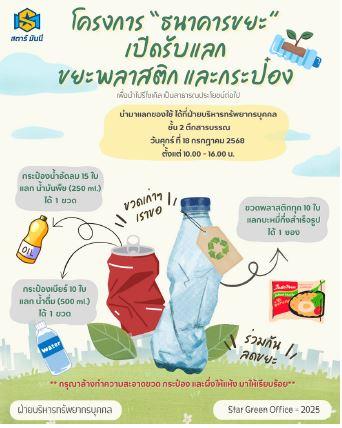
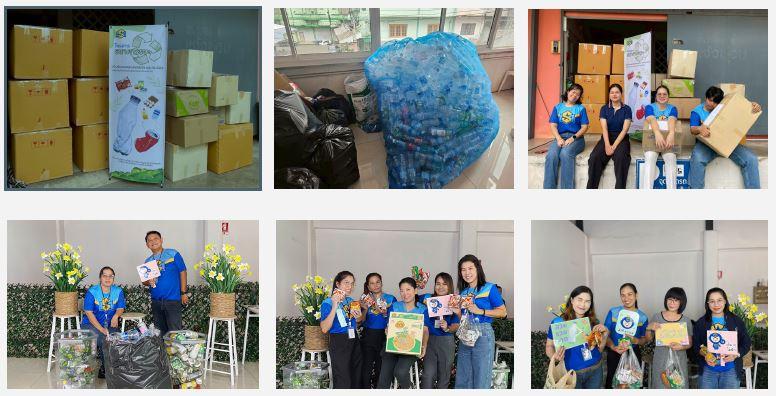
1. Waste Bank: An activity where plastic waste and cans are exchanged for consumer goods to reduce waste within the organization, for recycling into public benefits. The amount of waste collected includes 3,330 plastic water bottles and 262 soda and beer cans.
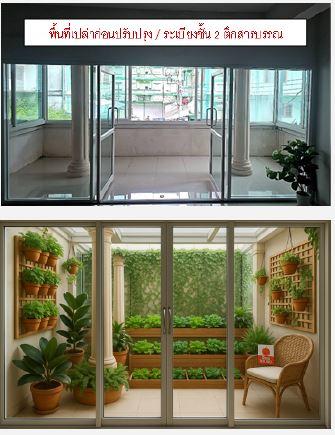
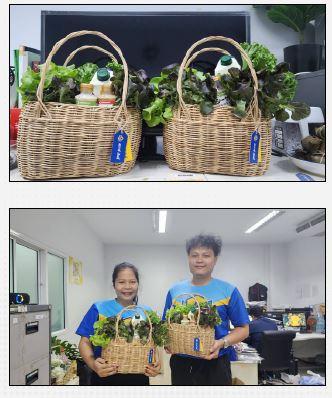
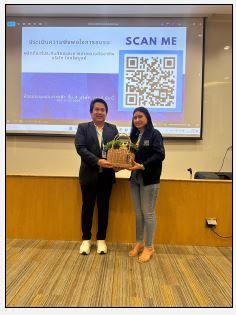
2. Potted plants in the office: Allocating empty space in the office, increasing green areas, growing vegetables to distribute to employees on Healthy Day, and arranging baskets to deliver to partners, speakers, and special guests of the organization.
-
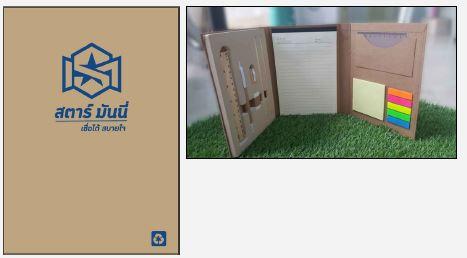
Eco-friendly Products: Changing products distributed to customers, partners, and employees to recycled goods, demonstrating greater care for nature. Total of 500 pieces.
-
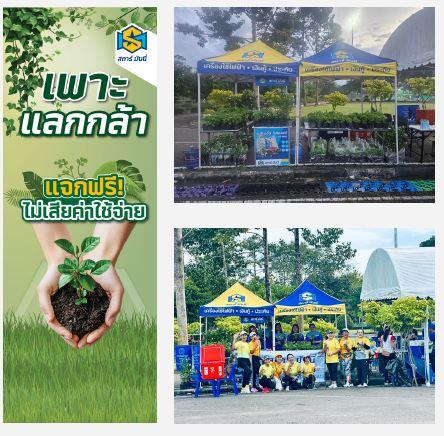
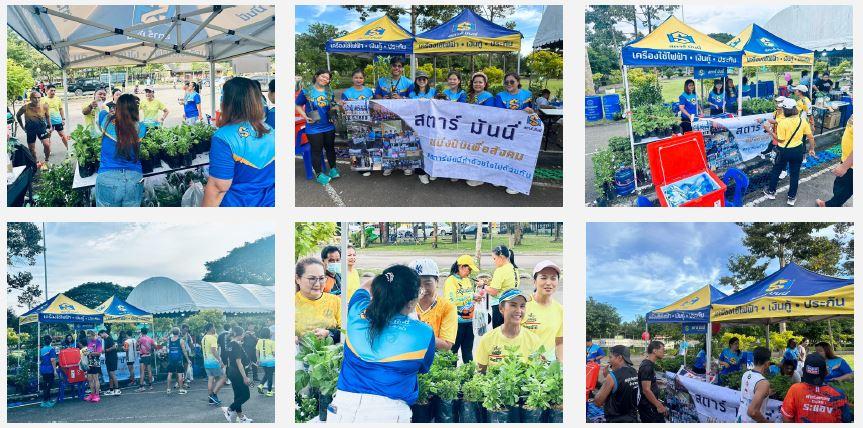
Seedling Exchange: Collaborating with the community to organize booths for distributing home-grown vegetables and air-purifying plants to increase green spaces in the community.
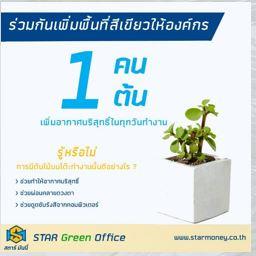
5. SM Green Office Project: This project aims to instill and campaign for employees across all departments and branches within the organization to collectively create green spaces and increase oxygen levels.
Organization
Employees — Plan & Guidelines
Has an Employee Management Plan
Yes
Plan Description
The company places importance on human resource management and development as a crucial factor for organizational success and sustainability. It systematically develops employee and labor management plans, covering compensation, employee potential development, promoting employee relations and engagement, as well as occupational safety and health, to create a fair, safe, and conducive working environment for sustainable growth.
The company has published relevant policies on its website (www.starmoney.co.th) Topic Investor Relations Menu / Corporate Governance / Company Policies and Charters / Good Corporate Governance Policy Compensation Policy , Welfare Policy , Personnel Development Policy , Work Motivation Policy , Workplace Environment Policy
Fair Compensation
The company establishes a fair and non-discriminatory compensation and welfare structure, in compliance with legal requirements, suitable for the nature of work, responsibilities, and performance. This is done in consideration of labor laws and market conditions, and is regularly reviewed and updated to create incentives, retain high-potential personnel, and foster organizational commitment.
Employee Training and Development
The company supports the development of knowledge, skills, and potential of employees at all levels through training and development activities aligned with their roles, responsibilities, and business direction, such as professional training, ethics and good governance, personal data protection, and human rights, to continuously enhance work capabilities and career growth.
Promoting Employee Relations and Engagement
The company promotes open and constructive internal communication, providing opportunities for employees to participate in expressing opinions, suggestions, and work improvements through internal activities and appropriate communication channels, including surveys on employee engagement and satisfaction, to continuously improve human resource management.
Occupational Safety and Health
The company prioritizes the health, safety, and occupational hygiene of its employees by providing a safe and hygienic working environment in compliance with relevant laws. It implements measures to prevent accidents and work-related risks, as well as providing knowledge and raising awareness about safety to prevent injuries and illnesses from work.
Plan Areas
| Plan Area |
|---|
| Fair employee compensation |
| Employee training and development |
| Promoting employee relations and participation |
| Occupational health and safety in workplace |
Employees — Workforce
Introduction
Treating employees and workers with respect for human rights may include fair employment and compensation, employee training and development, fostering employee engagement and satisfaction, and managing occupational safety, health, and working environment, among others. It also demonstrates efforts to reduce risks in disputes related to employees and labor to maintain competitiveness, attract potential talent, and develop employee loyalty to the organization.
The company adheres to human rights principles from employment to the care of employees and personnel, aiming to foster a sense of belonging as one family within the organization for all employees and personnel. In 2025, the company implemented significant employee-related operations as follows:
Employment
Details | Number of Employees (persons) | |
Male | Female | |
Permanent employees | 156 | 371 |
Employees with disabilities | 2 | 0 |
Total | 158 | 371 |
Workforce Data
| Metric | Current Year | Previous Year | Two Years Ago |
|---|---|---|---|
| Total number of employees (Persons) | 722 | 747 | 744 |
| Number of male employees (Persons) | 213 | 213 | 224 |
| Number of female employees (Persons) | 509 | 534 | 520 |
| Total employment of disabled persons (people) | 2 | 2 | 2 |
| Total disabled employees (people) | 2 | 2 | 2 |
| Total male disabled employees (people) | 2 | 2 | 2 |
| Total female disabled employees (people) | 0 | 0 | 0 |
| Total disabled workers who are non-employee (people) | 0 | 0 | 0 |
| Contributions to the fund for promoting and improving the quality of life for disabled persons | 1 | 1 | |
| Total number of male employees in operational level (Persons) | 176 | 181 | 188 |
| Total number of male employees in management level (Persons) | 33 | 24 | 32 |
| Total number of male employees in executive level (Persons) | 4 | 8 | 4 |
| Total number of female employees in operational level (Persons) | 433 | 462 | 453 |
| Total number of female employees in management level (Persons) | 72 | 68 | 64 |
| Total number of female employees in executive level (Persons) | 4 | 4 | 3 |
Employees — Remuneration & Provident Fund
Introduction
The Company maintains a policy of fair and non-discriminatory compensation for its personnel, in compliance with legal requirements. Compensation is determined by considering the suitability of the position, experience, qualifications, and responsibilities. The criteria for establishing compensation rates involve evaluating economic conditions and the cost of living, alongside a comparative analysis of compensation rates with both similar and different types of businesses, as well as the Company's performance. This approach ensures that employees receive appropriate compensation and remain competitive within the industry.
Remuneration & Provident Fund
| Metric | Current Year | Previous Year | Two Years Ago | Remark |
|---|---|---|---|---|
| Total disabled employees (people) | 224,349,237 | 234,682,902 | 236,953,027 | |
| Total male employee remuneration (Baht) | 79,154,602 | 89,987,728 | 83,076,496 | |
| Total female employee remuneration (Baht) | 145,194,635 | 144,695,174 | 153,876,531 | |
| Number of employees eligible to participate in PVD (persons) | 537 | 530 | 440 | |
| Total number of employees joining employee provident fund (Persons) | 209 | 204 | 172 | |
| Percentage of total number of employees joining employee provident fund to total number of employees (%) | 28.95 | 27.31 | 23.12 | |
| Number of PVD members / Total eligible employees (%) | 38.92 | 38.49 | 39.09 | |
| Total amount of provident fund contributed by the Company (Baht) | 1,525,914 | 1,914,137 | 1,761,154 | 2023: Total employer contribution to the provident fund for employees amounted to 1,761,154 Baht, comprising 455,200 Baht for executives and 1,305,954 Baht for general employees. 2024: Total employer contribution to the provident fund for employees amounted to 1,914,137 Baht, comprising 481,000 Baht for executives and 1,433,137 Baht for general employees. (The difference in provident fund contributions between 2023 and 2024 is due to the total amount for executives.) |
| Total amount of provident fund contributed by employee (baht) |
Employees — Training & Development
Introduction
The company has a personnel development policy that focuses on enhancing the potential of its "personnel" to increase the organization's competitive capabilities, including skills, knowledge, experience, teamwork ability, ethics, a good attitude towards the organization and work, in accordance with the abilities required by each position. The development approaches are:
Organizing training in both In-House Training and Public formats.
Training for internal personnel by external experts with specialized knowledge, experience, and abilities, tailored to the needs of each department.
Encouraging personnel to enhance their knowledge through various electronic media, thereby fostering a learning organization named Star Learning.
Teaching and transferring work methods from supervisors, and mutual knowledge transfer among colleagues.
Learning from the actual work performance of the personnel themselves.
Team building through a mentoring system, focusing on developing "people or stars of the organization" to ensure knowledge transfer from generation to generation, thereby leveraging the potential of outstanding employees to become future mentors.
Job rotation or reassignment of duties.
Enhancing the skills and capabilities of personnel to be diverse and unleashing their hidden potential through assigning special tasks and increasing responsibilities.
Employee training. In 2025, the company organized 37 training courses for employees to enhance their skills and work potential in alignment with the organization's direction and strategy. Includes mandatory courses. Hard Skills Soft Skills With an average of 13.59 hours of training or knowledge development activities per employee per year, exceeding the target of 12 hours per employee per year.
Training Data
| Metric | Current Year | Previous Year | Two Years Ago |
|---|---|---|---|
| Average employee training hours (Hours / Person / Year) | 13.59 | 16.8 | 18.05 |
| Employee development and training expenses (baht) | 402,990 | 208,651 | 251,621 |
Employees — Occupational Health & Safety
Introduction
The Company prioritizes safety, occupational health, and the working environment by providing suitable workplaces and equipment, promoting safety knowledge and awareness among employees at all levels, supporting necessary resources for safety management, consistently evaluating and preventing risks, and monitoring and reporting operational results to the Board of Directors to ensure that employees can work safely and happily.
In 2025, the Company will continuously develop and improve the efficiency of its safety operations to reduce the risks of illness, injury, or death, and to appropriately care for the quality of life of employees. Key operations are as follows:
Conduct fire evacuation training courses for employees in the event of a fire, to ensure employees know the correct evacuation procedures.
The Company has arranged group insurance benefits covering medical expenses in cases of accidents, hospitalization due to illness, critical illnesses, and death, to ensure the quality of life for employees and their families in the event of an employee's demise.
The Company provides welfare benefits for congratulations and condolences in cases of significant events involving employees or their families, to boost morale, show concern, and strengthen the bond between the organization and its employees. Examples include congratulatory benefits for the birth of an employee's child, an employee's marriage or ordination, condolence benefits for the death of an employee or a family member, or disaster relief benefits in cases of floods or storms damaging homes, etc.
The Company has arranged provident fund benefits to To promote savings and provide financial security for employees.
Occupational Health & Safety Data
| Metric | Current Year | Previous Year | Two Years Ago |
|---|---|---|---|
| Total number of lost time injury incidents by employees (Cases) | 0 | 0 | 0 |
Employees — Labour Relations
Introduction
In 2025, the Company developed plans and activities to enhance employee engagement. The objectives are to foster positive relationships within the organization, motivate and boost morale, provide opportunities for employees to participate and express opinions, promote quality of life, and reduce work-related stress and fatigue. This aims to cultivate a positive organizational culture that promotes long-term engagement and reduces turnover, ultimately leading to increased work efficiency and long-term organizational sustainability. Activities organized include volunteer/CSR initiatives, inter-departmental team-building activities with outdoor games, HR EXHIBITION ONLINE – to communicate internal news and distribute prizes, SM To the Future – announcing awards for outstanding performance branches, and SM Party and Happy New Year 2026 – a prize draw for all employees. Furthermore, in 2026, there are plans to organize a Town Hall meeting for communication between management and employees – 2026, featuring: Objectives in terms of talent retention and building a strong shared organizational culture. Enhance communication channels between management and employees. to listen to feedback, express appreciation, and foster a collaborative work culture, and to mitigate challenges, bottom-up communication There are also plans for a point-based incentive program to help achieve team activities or goals. AI technology is being utilized to make work faster and more effective. as well.
In 2025, the voluntary employee turnover rate was 12.60%, a decrease of 4.13% from the previous year. and the employee engagement score was 81.89%. Number of employees: 722 as of December 31, 2025. Number of survey respondents: 701, or 97.09%.
Labour Relations Data
| Metric | Current Year | Previous Year | Two Years Ago | Remark |
|---|---|---|---|---|
| Total voluntary resignations (Persons) | 91 | 125 | 173 | |
| Male employees who voluntary resigned (Persons) | 27 | 30 | 50 | |
| Female employees who voluntary resigned (Persons) | 64 | 95 | 123 | |
| Percentage of employee turnover leaving the Company voluntarily (%) | 12.6 | 16.73 | 23.16 | |
| Evaluation result of employee engagement | 1 | 1 | 1 | Year 2024: Employee engagement assessment results averaged 77.76% Year 2023: Employee engagement assessment results averaged 71.72% |
Employees — Employee Representation
Employees Are Represented Collectively
Yes
Forms of Representation
| Form |
|---|
| Welfare committee |
Employees — Targets
Has Set Employee Targets
Yes
Targets
| Indicator | Target Areas | Target Year | Target Year — Description |
|---|---|---|---|
| Assessment of Employee Job Satisfaction and Engagement with the Organization | 2985 · Description: Promoting employee relations and participation | 2,025 | Satisfaction assessment results: 81.89% |
| Target for employee knowledge development training: an average of 12 hours per person per year. | 2984 · Description: Employee training and development | 2,025 | Employee training and development results averaged 13.59 hours/person/year. |
Employees — Performance & Outcomes
Has Performance Results
Yes
Performance Description
1) Employment and vocational skill development
Indicator:
- Increased number of employed persons
- Number of participants who completed vocational skill training
2) Education
Indicator:
- Increased rate of further education
- Increased number of participants in learning activities
3) Occupational health, safety, health, and quality of life
Indicator:
- Decreased rate of work-related illness
- Increased number of health activities
4) Reducing social inequality
Indicator:
- Access to welfare
- Satisfaction and happiness
Customers — Plan & Guidelines
Has a Customer Management Plan
Yes
Plan Description
Fair customer service.
The company aims to ensure customers receive fair services and, for the benefit of consumer protection, financial service users are provided with responsible and fair service processes in accordance with consumer protection laws, which will enable the company to operate sustainably, as follows:
To ensure customers receive fair products and services in terms of both price and conditions, matching their needs and capabilities, and meeting their expectations. This also includes ensuring that customer data and assets are protected from inappropriate use.
To assure customers that the company focuses on fair service, sincere customer service, and avoids exploitation, and also provides basic services and products to ensure widespread access to financial services at reasonable prices.
To ensure customers receive advice that matches their needs, financial capabilities, and understanding, without disturbing them, and to receive clear, complete, and sufficient information for decision-making with correct understanding, both before, during, and after sales.
To enable customers to conveniently carry out various post-sales operations and receive fair treatment.
To ensure customers understand their rights and responsibilities regarding the use of financial services, playing a crucial role in promoting financial literacy and system management.
The company has established a Market Conduct Policy for fair customer service management and regularly reviews and updates it to be appropriate and consistent with changing circumstances, serving as a guiding principle for business operations.
Communication of information regarding products and services.
Criteria for the management of operational systems related to customer service.
System 1: Corporate Culture and Roles and Responsibilities of the Board of Directors and Senior Management. The company's Board of Directors and Senior Management are responsible for concretely and effectively promoting fair service provision. Additionally, sub-committees are appointed for work screening.
System 2: Product Development and Client Segmentation. The company offers products suitable for the needs, financial capabilities, and understanding of each target customer group. This is to ensure suitability with employees' sales capabilities and operational systems, as well as the ability to control and supervise sales quality to be fair to customers.
System 3: Remuneration Scheme. Remuneration and disciplinary measures are established, significantly considering the quality of service for employees involved in customer service, including supervising executives, to appropriately promote fair service provision.
System 4: Sale Process. Customers receive sales offers that do not infringe on their privacy, obtain complete and essential information that is not exaggerated or distorted, and is sufficient to make decisions with correct understanding and adequate for service usage. They receive products and services appropriate to their needs, financial capabilities, and understanding.
System 5: Communication and Training for Employees. Employees at all levels involved in customer service receive communication that helps them recognize the importance of fair service and possess sufficient knowledge and ability to perform their duties, ensuring fair service and appropriate practical implementation.
and the company has a Code of Conduct and Business Ethics.
Part 1 Ethics and business conduct in various aspects.
Clause 1.3 Treatment of Customers.
To provide services to customers under fair conditions and based on the principle of fair returns for both parties.
Company employees must be dedicated and committed to developing quality services, adhering to relevant regulations, offering reasonable prices, and being responsive to situations.
Strictly adhere to contracts or agreed-upon terms and conditions. In cases where any condition cannot be met, promptly inform business partners and/or creditors in advance to jointly consider solutions.
Maintain customer confidentiality, unless the customer provides written consent for disclosure or it is required by law, and refrain from using customer information for personal benefit or the benefit of related parties.
Operational Governance Policy. Regarding the treatment of customers, stakeholders, and society.
Strictly maintain the confidentiality of customers, business partners, and the company, taking care to prevent confidential documents or information from leaking or reaching unauthorized persons.
Adhere to safety regulations, as well as consistently and effectively maintain a safe environment.
Open to receiving feedback and suggestions from customers for the benefit of improving the company's operations.
Avoid giving and receiving gifts, entertainment, or any benefits from business partners or parties involved with the company's business, except for the benefit of normal business operations or during festivals or customary occasions of appropriate value. If a received gift is in the form of money or an item of high value, promptly inform your direct supervisor for immediate awareness.
Strengthening and managing customer relationships in accordance with the Code of Conduct and Business Ethics and the Operational Governance Policy.
The company prioritizes strengthening and managing customer relationships by focusing on transparent, accurate, and fair communication to build confidence in the company's products and services.
The company has established appropriate and diverse communication channels and feedback mechanisms for customers to analyze suggestions and complaints and continuously improve the quality, safety, and standards of its products and services.
The company develops service and customer care standards by providing complete and clear information, prioritizing the benefits and safety of customers/consumers.
The company emphasizes developing the knowledge and skills of employees involved in customer service to ensure they can provide quality and ethical service, and are aware of customer safety and well-being.
Such operations help foster good relationships with customers, increase confidence in products and services, and support responsible and sustainable business operations.
Complaint Management.
Criteria for the management of operational systems related to customer service.
System 7: Problem and Complaint Handling. The company's problem resolution, complaint management, and compensation processes are clear, swift, independent, efficient, and fair. Information is regularly collected, analyzed, and reported to the Executive Board. After receiving a complaint, a summary of the complaint will be prepared and forwarded to the responsible manager of the department against which the complaint was made, so that the manager can develop a plan to resolve the issue.
The company has provided channels for stakeholders to report tips, suggestions, or complaints regarding corruption or any actions that do not comply with the company's criteria. Your complaints will be sent directly to the company's management and to the Board of Directors.
Complaint Channels
Notify or complain via the company's telephone:
Contact via Call Center at 061-393-9988
E-Mail : info@starmoney.co.th
https://www.starmoney.co.th/Home/ComplainUs
https://line.me/R/ti/p/%40starmoney
https://www.facebook.com/starmoneyofficialhp
By mail.
To the Managing Director
Star Money Public Company Limited
House No. 204/1-8, Sukhumvit Road, Thang Kwian Subdistrict, Klaeng District
Rayong Province 21110
Personal Data Protection.
System 6: Customer Data Privacy. Customer data is securely managed, with consideration for customer privacy and confidentiality. The transfer of customer data to others must not affect customer privacy. In cases of using outsourced services, agents, or other service providers, strict monitoring of operations is maintained.
System 8: Control, Supervision, and Audit. There are processes, control systems, and operational audits that consider fair and stringent service provision, prevent risks and irregularities to effectively avoid damage, and are reviewed or appropriately adjusted for correctness.
The company recognizes the importance of your privacy and personal data protection, and compliance with relevant laws and regulations. A Personal Data Protection Notice (Privacy Notice) has been prepared to inform you about personal data protection and your rights as a data subject. A Data Protection Officer (DPO) and a working committee have been appointed to ensure that the company's operations regarding the collection, use, and disclosure of personal data comply with the Personal Data Protection Act B.E. 2562 (2019), subordinate laws, announcements, and various regulations related to personal data protection. Their role is to provide advice and coordinate with relevant agencies. The company has established security measures for personal data, both in document and electronic formats, to prevent loss, unauthorized access, use, alteration, correction, or disclosure of personal data without legal right or justification.
Cybersecurity.
System 9: Operation and Business Continuity. There are reliable operating systems, risk management, and business continuity plans for both normal and emergency situations, ensuring that customer orders or requests are processed correctly, completely, and on time. Customers receive continuous and fair service, with systematic control through information technology systems.
The company recognizes the importance of information technology for business operations and service provision, having adopted IT systems as a crucial infrastructure to enhance efficiency, reduce costs, and facilitate faster operations, thereby supporting the company's strategic business plans. However, a lack of proper management could lead to IT risks and cyber threats that could cause damage to the company. Therefore, the company has established an Information Technology Security Policy as a framework for practice, ensuring good IT management in accordance with international standards, security, and appropriate risk management.
and Full policy details can be found at https://www.starmoney.co.th/Investor_Relations Investor Relations: Corporate Governance – Company Policies and Charters, including the Good Corporate Governance Policy and the Fair Customer Treatment Policy.
Plan Areas
| Plan Area |
|---|
| Responsible production and services for customers |
| Communication of product and service impacts to customers/consumers |
| Development of customer satisfaction and customer relationship |
| Protection of customer personal information |
Customers — Satisfaction Results
Customer Satisfaction Results
| Metric | Current Year | Previous Year | Two Years Ago | Remark |
|---|---|---|---|---|
| Evaluation results of customer satisfaction | 1 | 1 | 1 | Year 2023: Average customer satisfaction evaluation result 93.43% Year 2024: Average customer satisfaction evaluation result 95.50% |
Customers — Targets
Has Set Customer Targets
Yes
Targets
| Indicator | Target Areas | Target Year | Target Year — Description |
|---|---|---|---|
| Customer Satisfaction Assessment | 3009 · Description: Development of customer satisfaction and customer relationship | 2,025 | Assess customer satisfaction at no less than 90 percent. |
| Impacts of cyber threats | 3010 · Description: Consumer data privacy and protection | 2,025 | No impact from cyber threats |
| Ratio of complaints to the number of service transactions | 3007 · Description: Responsible production and services for customers | 2,025 | Not exceeding 1% of the total number of service transactions. |
Customers — Performance & Outcomes
Has Performance Results
Yes
Performance Description
Cybersecurity and personal data protection.
Knowledge training.
Provide sufficient training to IT operations staff on relevant information technology security content.
Provide training to all employees on cybersecurity awareness and the use of information technology.
In 2025. The Company organized cybersecurity awareness training and conducted a knowledge test after the training. A total of 517 employees and executives attended the training and completed the test. representing 71.61% of the total number of employees. with an average score of 9.88 and a maximum score of 10, covering the following learning topics:
1. What is Cybersecurity? Laws and standards related to cybersecurity.
2. Key cybersecurity threat types, such as Malware, Phishing, Spam, Ransomware.
3. Cybersecurity awareness in daily life: Practices for safety regarding computers, passwords, emails, websites, etc.
Dissemination and public relations.
The Company has disseminated its Information Technology Security Policy and Privacy Notice through the Company's internal information system for employees and executives to read, understand, and acknowledge the guidelines. The system records and stores reading history to demonstrate acknowledgment and understanding of the content, with an average of 78.98%. and has a plan to continuously support training and knowledge assessment to reach 100. % in accordance with policy guidelines and subject to ongoing review and updates.
In 2025, the Company had no incidents related to cybersecurity or customer data breaches.
Complaint management, including fair service provision.
The Company has established a standardized, transparent, and verifiable complaint management system, along with fair service guidelines, to protect the rights of customers and consumers. This includes various channels for receiving complaints, impartial consideration of complaints, and continuous use of operational results to improve product and service quality. After receiving a complaint, a summary of the complaint information will be prepared and forwarded to the responsible department manager to develop a resolution plan, with a target of no more than 1% of the total service transactions. The management result was 0.03%, which is in line with the target.
In 2025, the Company received no significant customer complaints.
Developing customer satisfaction and strengthening customer relationships.
The Company has a customer relationship management plan aimed at improving service quality, enhancing operational efficiency, and listening to customer feedback for continuous operational improvement. The Company sets a target for overall customer satisfaction of no less than 90% and monitors results annually. From the customer satisfaction assessment in the past year, the overall satisfaction level was 95.80%, which met the set target.
Community & Social — Plan & Guidelines
Has a Community & Social Plan
Yes
Plan Description
1) Employment and professional skill development
- Promote stable employment and appropriate income for the public
- Develop new skills to support the digital labor market, with internal training and external course sourcing
- Create career opportunities for employees
Strategy:
- Provide vocational training, such as digital skills, service work, and online sales
- Promote supplementary and freelance occupations, such as organic farming and handicrafts
2) Education
- Ensure equal access to education
- Promote lifelong learning
3) Occupational health, safety, and quality of life
- Reduce occupational hazards
- Promote physical and mental health
- Improve employee quality of life
Strategy:
- Annual health check-ups
- Develop safety systems in workplaces
- Promote exercise and wellness activities
4) Reducing social inequality
- Ensure equal access to basic services for the public
- Create opportunities to develop everyone's potential
Strategy:
- Support system for underprivileged individuals
- Support housing and welfare
Plan Areas
| Plan Area |
|---|
| Employment and professional skill development |
| Education |
| Occupational health, safety, health, and quality of life |
| Reducing inequality and promoting social equality |
Community & Social — Targets
Has Set Community & Social Targets
No
Community & Social — Performance & Outcomes
Has Performance Results
No
Performance Description
1) Employment and Vocational Skill Development
Indicators:
- Increased number of employed individuals
- Number of individuals who completed vocational skill training
2) Education
Indicators:
- Increased rate of continued education
- Increased number of participants in learning activities
3) Occupational Health, Safety, Health, and Quality of Life
Indicators:
- Decreased rate of work-related illnesses
- Increased number of health activities
4) Reduction of Social Inequality
Indicators:
- Increased access to welfare
- Increased satisfaction with public services
Other Social Management
Plan & Outcomes — Description
The company recognizes the importance of managing business development for sustainable growth alongside social responsibility. It aims to operate its business under good corporate governance and ethical principles, coupled with caring for the environment, utilizing resources efficiently, and demonstrating genuine social responsibility. This includes considering all internal and external stakeholders across the entire supply chain, from shareholders, employees, and customers to communities and society at large. The company is committed to conducting business with attention to community feedback and expectations in all processes, focusing on economic development within communities while simultaneously improving the environment and quality of life for community members, as well as Community and social development: Jointly developing communities for a better quality of life, including respecting local cultures.
In 2025, the company organized community and social assistance activities, including:
Operational Guidelines
-
Increased employee participation in social activities.
-
Supporting projects that create long-term positive impact.
Projects/Activities in 2025
1. Do Good Policy
-
“Do Good” Policy: Donating unused items to the “Left-Over, Please” project.
-
MCOT CHANT Warmth Sharing Project for Kids 2025
-
Blood, organ, and eye donation in collaboration with Klaeng Hospital, with a total of 21 donors.
-
Supported drinking water for officials during the Rayong province fire incident.
-
Donated relief supplies to flood victims in Hat Yai.
-
Supported consumer goods for border area victims affected by unrest.
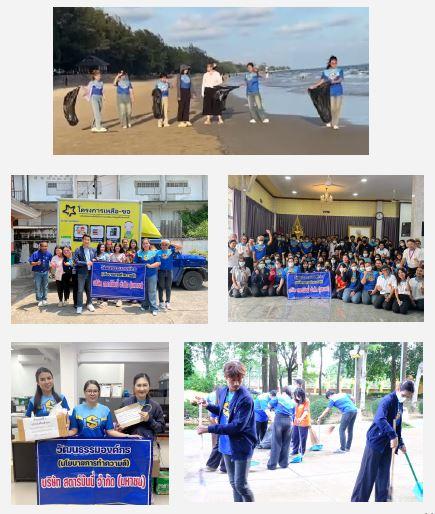
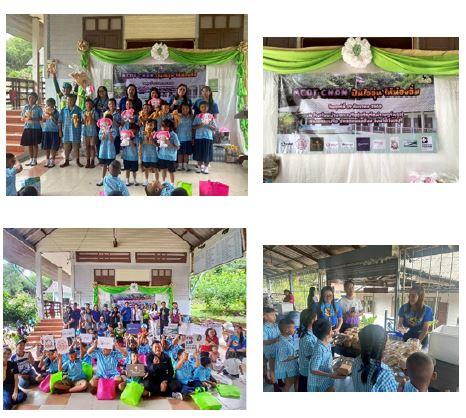
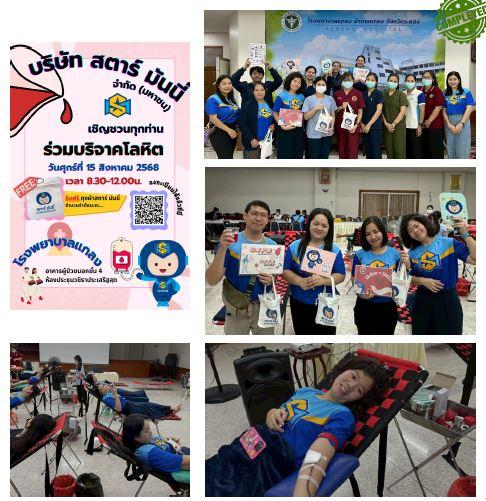
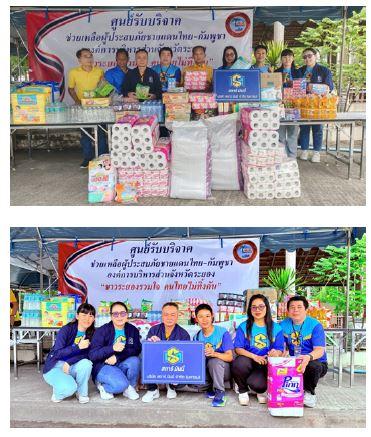
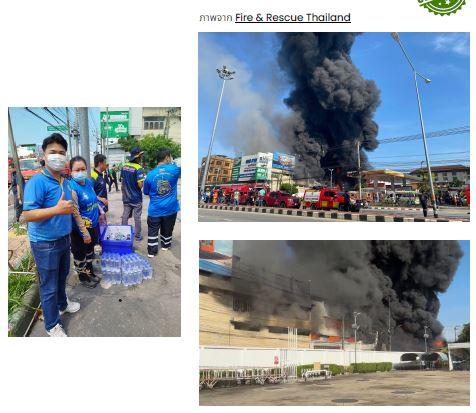

2. Project Designing Financial Futures Star Job Go ! ! ( Supporting supplementary occupations for employees and communities )
to increase opportunities for supplementary income for employees and community members, enhance practical vocational skills, and promote financial literacy, financial stability, and strong financial resilience among employees, customers, the general public, including children and youth, in line with the organization's mission. Vocational training provided includes:
-
Teaching how to make 'Kluay Break Taek' (Crispy Banana Chips)
-
Teaching how to make banana chiffon cake
-
Teaching frog farming for sale

3. Education
-
Project “UTCC Tutor Tutor all over Thailand Achieve Dream University 2025” In collaboration with the Rayong Chamber of Commerce and the University of the Thai Chamber of Commerce.
to support and encourage students preparing for university entrance examinations.
Activities at the event included booths distributing premium items such as notebooks, pens, umbrellas, cloth bags, and water bottles, totaling 632 pieces.
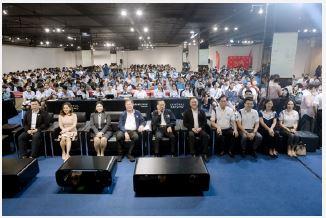
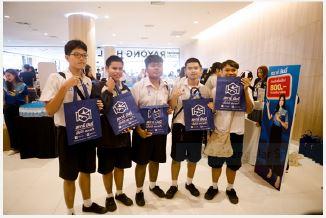
Overall Social Outcomes in 2025
-
Communities received support in economic, educational, and basic welfare aspects.
-
Increased employee participation in volunteer activities.
-
Strong relationships were established between the organization and its stakeholders.
-
Promoting the organization's image as a responsible and sustainable business.
Law Violation Incidents
Law Violation Incidents
| Metric | Current Year | Previous Year | Two Years Ago |
|---|---|---|---|
| The total number of cases or incidents of significant violations of laws or regulations regarding social and human rights (Cases) | 0 | 0 | 0 |
| The total number of cases or incidents that cause significant labor disputes (Cases) | 0 | 0 | 0 |
| The total number of cases or complaints related to consumer rights violations (Cases) | 0 | 0 | 0 |
| The total number of cases or complaints related to partner rights violations (Cases) | 0 | 0 | 0 |
| The total number of cases or incidents that cause disputes with the community/society (Cases) | 0 | 0 | 0 |
| The total number of cases or incidents related to cyber security or customer data breaches (Cases) | 0 | 0 | 0 |
| The total number of cases or incidents related to safety and occupational health at work (Cases) | 0 | 0 | 0 |